
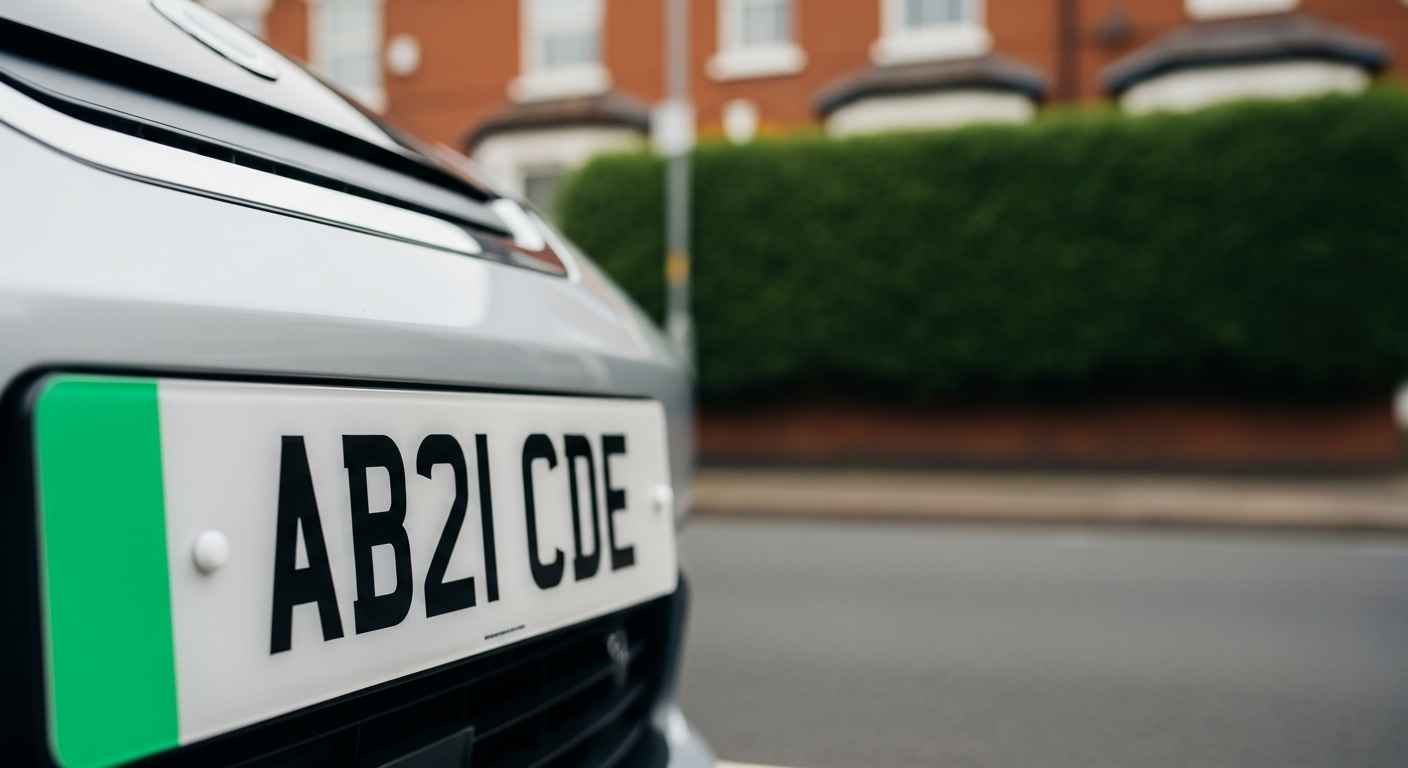
Some eagle-eyed motorists may have noticed a distinctive green marking on some new registration plates but most have no idea what it means.
According to thisismoney.co.uk, some drivers think a green plate means you’re permitted to park in green zones, that the driver is Irish or to show you’re a Green Party member!
What does the green mean on a number plate?
The DVLA permitted the introduction of Green number plates in December 2020 and these plates are only fitted to pure electric vehicles to indicate that a car is environmentally friendly with zero emissions.
A green number plate in the UK is not fitted to partially electric hybrids or hybrid plug-ins; they are only fitted to 100% electric-powered vehicles (EVs) and to the less common hydrogen cars.
Are green number plates legal?
Green number plates are not mandatory in the UK and so it isn’t illegal NOT to have one on a pure electric vehicle. However, it’s expected that most, if not all, new EV sellers will install them as a matter of course.
Reasons for having a green number plate
Some of the reasons and benefits of having a green number plate include:
- You can wear a green registration plate like an environmental badge of honour and be proud to show off that you’re doing your bit for the environment.
- You are incentivising others to purchase zero-emission vehicles.
- Some local authorities may introduce incentives like reduced car parking charges or use of bus lanes for EVs (but this hasn’t happened yet).
- You can avoid expensive fees that fossil-fuelled car drivers have to pay for driving through clean air zones such as low emission zones (LEZs), ultra-low emission zones (ULEZs) or zero-emission zones (ZEZs).
How to get a green number plate
You can get a green number plate by:
- Purchasing a pure electric vehicle with zero emissions
- Or if you have an EV with no green on the plates, you can purchase new green plates from places like Halfords (you will need to produce your V5 registration document to prove vehicle ownership and eligibility)
- Install the number plates yourself or have a supplier install them for you (most do)
- Cheaply buy green stickers online to put on your existing number plates.
Where can you get a green number plate from?
You can buy a new green number plate from various online suppliers, but remember, you will have to install them yourself or take them to a garage and pay for installation separately.
Alternatively, you can go to somewhere like Halfords who will install the new plates for you.
A cheap way to update your plates (as mentioned above) is to simply buy two rectangle stickers online and neatly apply them to your existing number plate (ensuring that this is done properly and not covering up any important letters or numbers on the plate).
How much is a green number plate?
Halfords charge:
- £18 for a front white plate
- £18 for a rear yellow plate
- Or £36 for both
There are other online suppliers like eBay, for example, who charge slightly less but, of course, you will have to install them yourself or pay someone else to, if you buy them online.
Does having a green number plate affect your car insurance or other related costs?
Yes it does, but in a good way!
As reported in our blog, “Electric vehicles are £90 cheaper to insure as sales soar”, car insurance now costs less for electric motors due to their increased popularity.
Our recent article also highlights that it’s actually cheaper to run an electric car than it is to run a fossil-fuelled car. This is because the cost of charging an electric car is cheaper than fuel, you pay less on servicing and maintenance and you get free tax on EVs costing up to £40,000, registered in April 2017 or later.